
20th November 2026
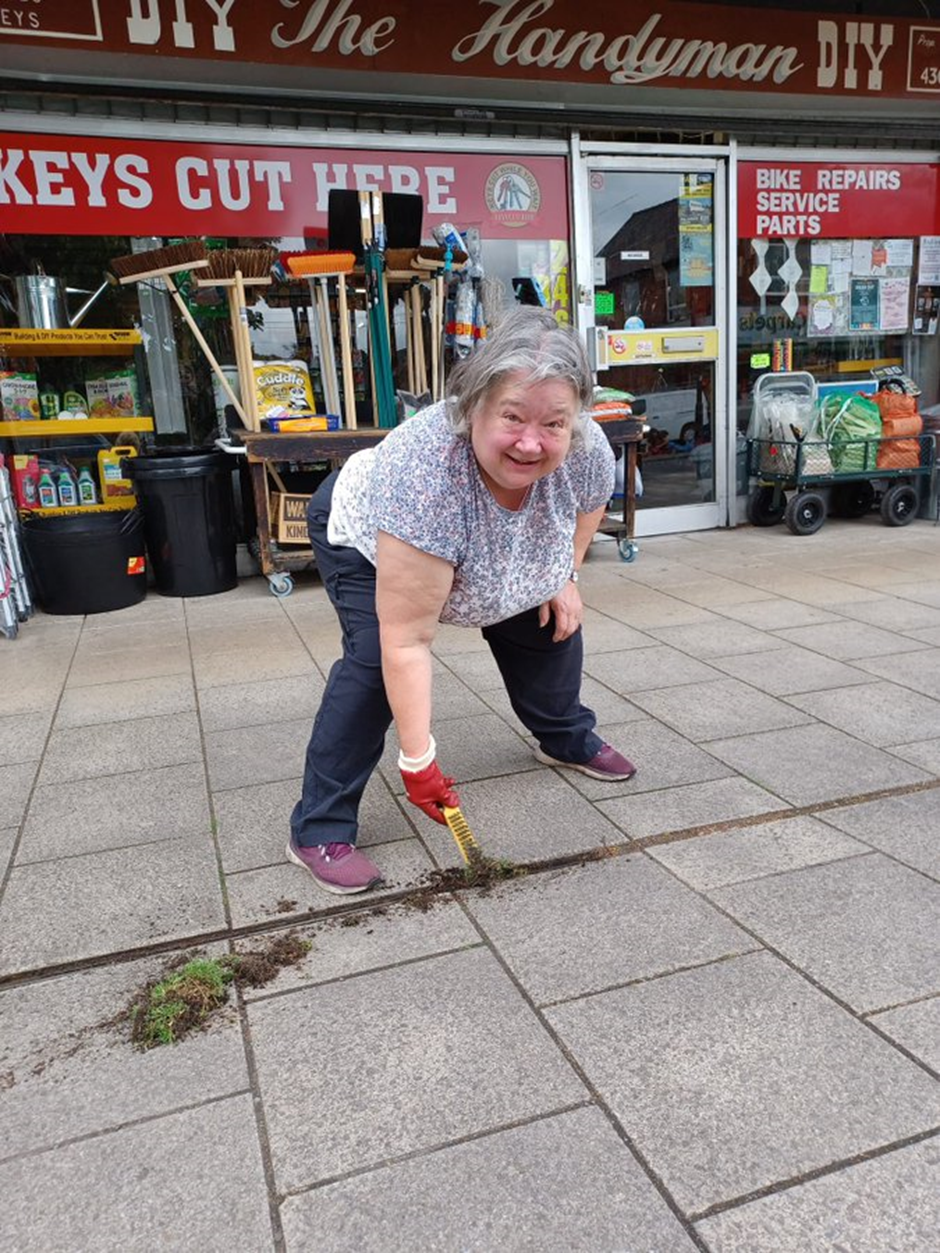
A photograph of a Liberal Democrat councillor holding a large clump of grass was supposed to demonstrate action in Romiley. Instead, questions remain about the work carried out, the effectiveness of the exercise and, most intriguingly, where the grass came from.
A little bit of grass has turned into a rather bigger question for local politics in Romiley.
In August 2025, Councillor Angela Clark was photographed apparently clearing a roadside gulley in Romiley village, proudly displaying a substantial sod of grass.
The photograph appeared to show a councillor getting stuck into a local maintenance problem.
But was this really a meaningful piece of work, or was the publicity considerably greater than the practical achievement?
The original report published by the Romiley Gazette on 10 August raised several questions which deserve proper answers.
According to the report, only approximately three to four feet of the gulley appeared to have been cleared.
That immediately raises the question of why such a short section was tackled and whether the work made any meaningful difference to the drainage or cleanliness of the area.
If a gulley needs attention, surely residents would expect the problem to be properly addressed rather than a small section being cleared for the camera.
The mystery of the missing grass
Perhaps the most intriguing aspect of the photograph was the large clump of grass being displayed by the councillor.
Residents familiar with the location reportedly questioned where it had come from, arguing that the gulley had never contained vegetation on anything like the scale suggested by the photograph.
A second photograph, taken immediately after the exercise, was also said to show little evidence of substantial vegetation in the surrounding area.
This does not establish where the grass originated, but it does raise a perfectly reasonable question.
Was it actually removed from the gulley, and if so, precisely where?
It should not be difficult to provide a straightforward explanation.
Was the job actually completed?
There is another issue which deserves attention.
Clearing a few feet of a gulley may make for a photograph, but residents are entitled to know whether the underlying maintenance problem was resolved.
Was the drainage improved? Was the entire affected section inspected? Was further work required? Did the council record the job as completed?
These are basic questions about the effectiveness of local maintenance, not unreasonable demands for information.
Councillors are elected to represent residents and scrutinise the services provided by the council. They should be able to explain what their interventions achieve.
Questions submitted to the area committee
The original Romiley Gazette report stated that a formal question had been submitted to the Werneth Area Committee, seeking answers about the limited extent of the clearance, its effectiveness and the origin of the grass.
The committee provides an important opportunity for local issues to be raised and councillors to be held publicly accountable.
However, the questions deserve clear answers rather than being allowed to disappear into the machinery of council business.
The issue is not whether a councillor should ever get involved in practical local work. Of course they should.
The issue is whether residents are being shown a genuine improvement or simply a photograph which creates an impression of activity.
Romiley deserves substance, not just photographs
Local residents do not expect their councillors to solve every problem personally.
They do, however, expect them to identify problems, press the relevant council departments for action and make sure that work is completed properly.
A photograph of someone holding a clump of grass is no substitute for evidence that a maintenance problem has been resolved.
If the work was effective, the councillor should have no difficulty explaining what was done and what improvement followed.
If it was only a small initial clearance, residents deserve to know what further action was planned.
And if the grass came from somewhere other than the gulley, that too should be clarified.
The questions are straightforward:
- Exactly which section of the gulley was cleared?
- Why was only three to four feet tackled?
- Was the drainage problem actually resolved?
- Was the grass in the photograph removed from that gulley?
- Was any further maintenance commissioned or completed?
Councillor Clark and Stockport Council has already had an opportunity to answer these questions. No response was received.
In local politics, it is easy to take a photograph suggesting that something has been achieved. The real test is whether anything has actually improved for the people who live there.
Romiley residents deserve the answer – and perhaps a little less posing and a little more proof.
